
The full picture of every session — in every client's record.
Auxilison connects the devices and tools you already work with, so objective data from each session flows straight into the client's record. What a client experienced, how their body responded, and which program they were receiving — captured together, automatically, with nothing to transcribe by hand.
See what clients feel — not just what they report.
Self-reported check-ins tell you what a client noticed. They can't tell you what was happening underneath.
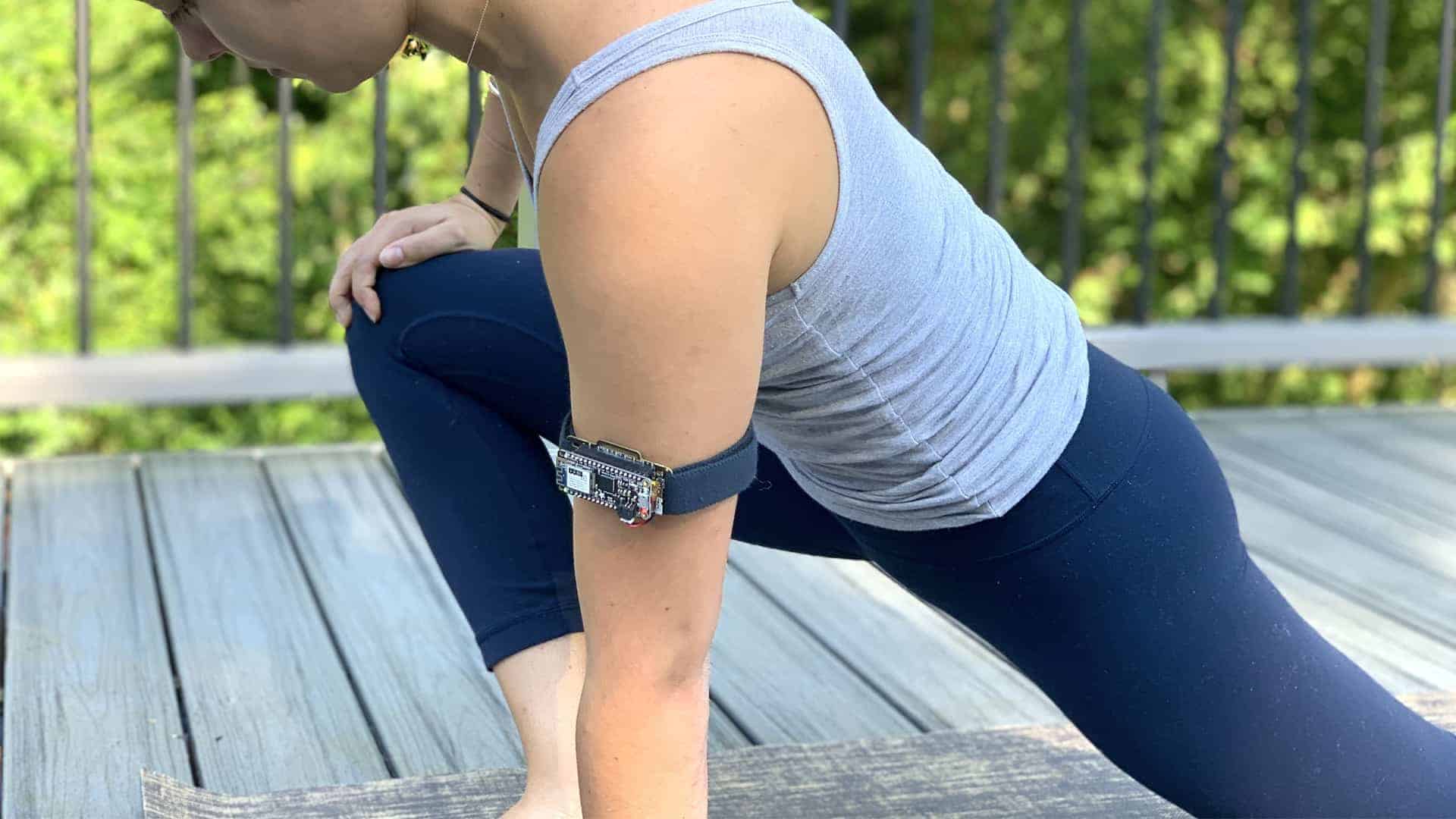
By pairing a wearable biosensor to a session, Auxilison captures physiological signals — heart rate and related measures — continuously, while a client moves through an audio or listening program. Those readings are written back to the client's record alongside the exact program they were receiving and when.
The result is an objective layer practitioners have never had at this price or this ease: a moment-by-moment, session-over-session view of how a program actually lands for each individual. Patterns emerge across a series that no single conversation would surface — and every reading lives where the rest of the client's story already does.
Available today: a research-grade physiological wearable for capturing biometric signals during sessions. Reach out and we'll help you get set up.
What we measure — and why it matters.
A wellness, listening, or meditation program changes what's happening inside the body and mind — and those changes can be measured. Auxilison isn't only the app that delivers your program; it's the data layer underneath it.
Your clients experience your program through an app tailored to your brand, while the Auxilison back-end captures signals during each session and pairs them to that client's record — the same place you manage program settings and your client roster from the web app. The result is something most programs have never had: objective evidence of how the program performs, client by client and session by session. That's the foundation for validating outcomes, satisfying funders and clinical partners, and refining the program itself.
We capture data from the sensors and tools that fit your program — physiological wearables today, with eye tracking and brain-and-body sensing on the way, plus an open API for other devices and data sources.
What we capture today
These signals read the autonomic nervous system — the body's shift from "on alert" toward "at ease" that most calming programs are designed to produce.
| What we measure | What it reveals about the session |
|---|---|
| Heart rate variability (HRV) | The clearest sign of relaxation and self-regulation. HRV tends to rise as a client lets go and breathing slows — making it the best single indicator that a program is doing its work. |
| Heart rate | The simplest read on settling. A heart rate that eases over a session is a client moving from tension toward calm. |
| Breathing rate | Slow, settled breathing is the engine behind most calming programs. Watching it slow over a session shows the practice taking hold. |
| Skin response (arousal) | A direct window onto the "alert" system. As tension eases, this quiets — and a downward trend reflects a client genuinely relaxing rather than just sitting still. |
| Moment-to-moment reactivity | Brief, time-stamped responses that show what moved a client and when — a reaction at a specific passage, not just a vague sense of the whole session. |
| Stillness & movement | How a client physically settles into the session, plus a quality check that keeps the readings you review honest and clean. |
On the roadmap — a fuller picture of attention and state
As programs and partners call for deeper measurement, Auxilison is built to take on research-grade sources that reach beyond the autonomic signals above — into where attention goes and what the brain is doing.
Attention & engagement — eye tracking and pupillometry
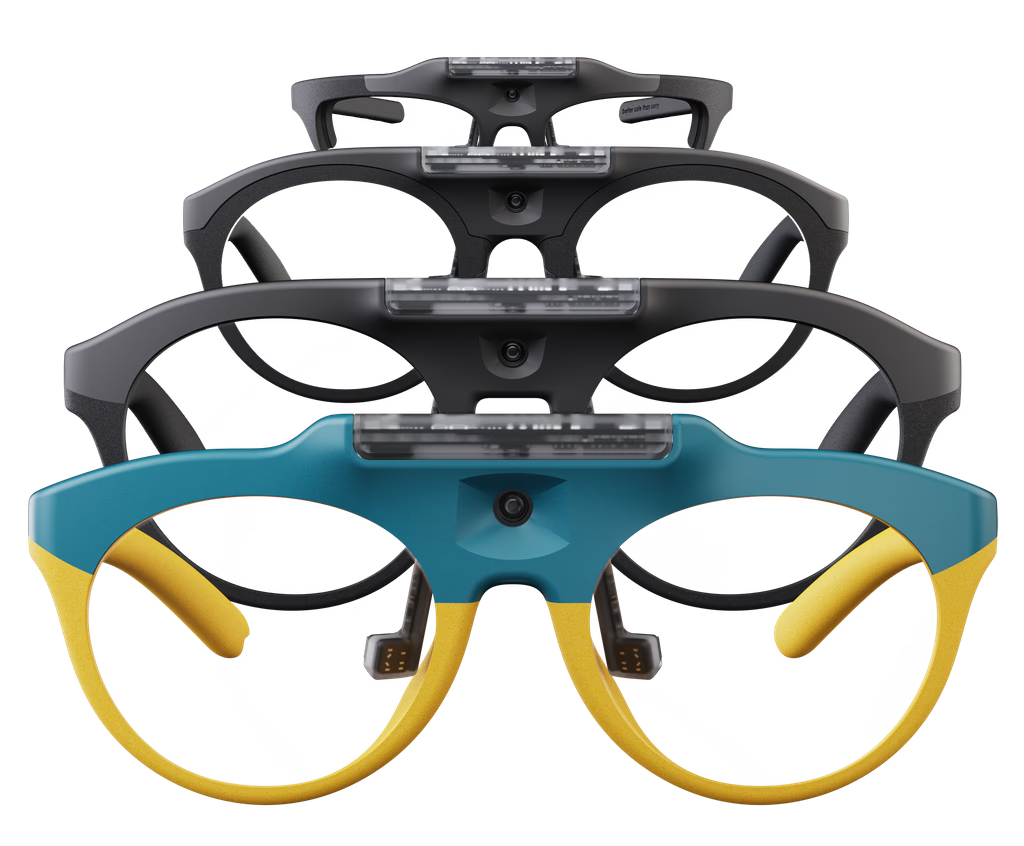
Lightweight eye-tracking glasses add a layer the body signals can't: where a client's focus actually is, and how hard they're working to stay with the program.
| What we measure | What it reveals about the session |
|---|---|
| Gaze & fixations | Where attention lands and how long it holds — and the moments it drifts away from the program. |
| Pupil response (pupillometry) | Pupil size tracks cognitive load and arousal, and is sensitive to listening effort specifically — how much work a client is putting into taking in an audio program, moment by moment. |
| Blinks & eyelid behavior | Markers of drowsiness, fatigue, and sustained engagement over the course of a session. |
Eye tracking is most powerful for programs with an active-listening or visual component; pupillometry, in particular, gives a direct read on how demanding the listening experience is for each client.
Brain & body together — neural and multimodal sensing
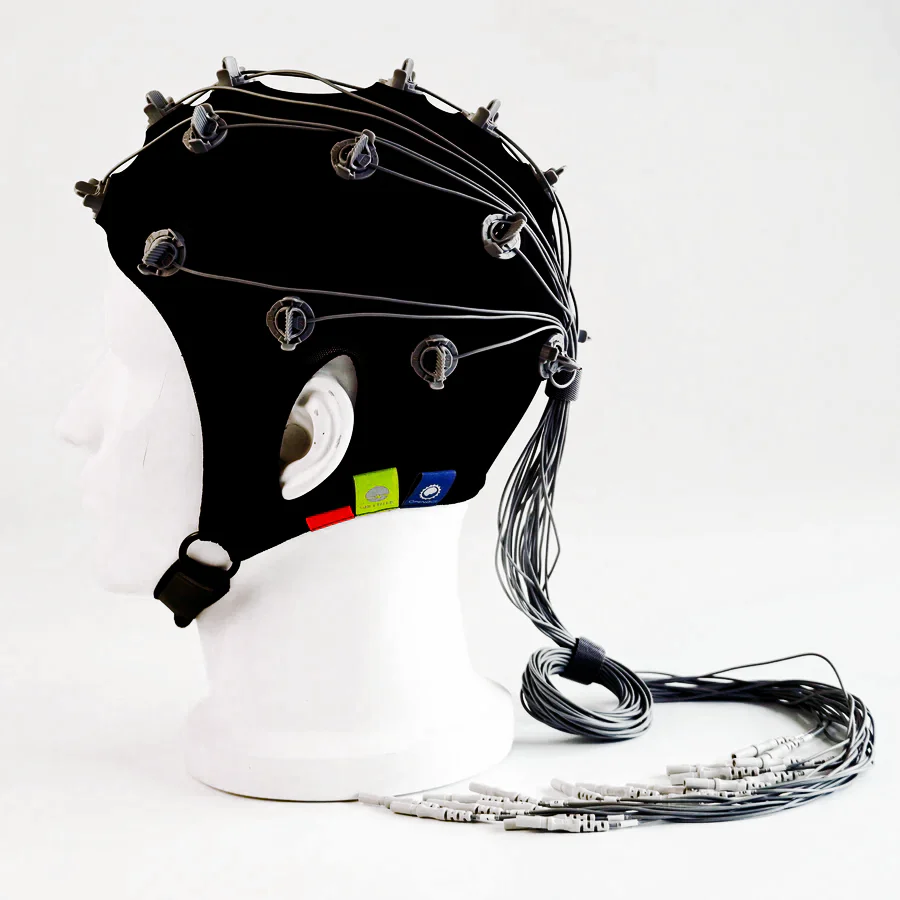
The deepest layer brings in brain activity alongside the body, in a single synchronized stream — moving from correlates of a relaxed or focused state to a direct view of it. This is the modality clinical and research partners ask for, and it's where multimodal headsets that combine EEG with body and eye signals come in.
| What we measure | What it reveals about the session |
|---|---|
| Brain activity (EEG) | Research-grade brainwave signals associated with relaxation, attention, and cognitive load — the most direct evidence of a meditative or focused state taking hold. |
| Facial & eye-muscle activity (EMG / EOG) | Easing of facial tension and patterns of eye movement — fine-grained signs of a client settling. |
| Combined brain + body + gaze | All signals captured on a single clock, so neural, autonomic, and attentional data line up exactly — enabling state classifications like attention, cognitive workload, emotional arousal, and stress. |
See the session at two levels
Across the session
Did the client down-regulate? HRV, heart rate, breathing, and arousal together tell you whether a client moved toward calm, held steady, or stayed activated.
Within the session
What reached them? Time-stamped signals let you line moments of reaction, attention, or effort up against the program itself, turning a single session into something you can actually learn from.
See the series, not just the session
Because every reading lands in the client's record, patterns build over time. The shift you hope to see — a client settling faster, attending more easily, regulating more readily session after session — becomes visible as a trend, not a hunch. That same record is what lets a practitioner, a network, or a funder evaluate whether the program is working at the population level.
Acquire from the sources that fit your program
Auxilison is sensor- and source-agnostic by design. Beyond the devices above, the platform's open API lets programs bring in additional wearables, instruments, and software data sources — so the data you collect matches what your program, your research, and your partners actually need to demonstrate.
These are physiological, attentional, and neural signals that correlate with relaxation, engagement, and arousal — supportive evidence for a practitioner's judgment and for program evaluation, not clinical readouts. Auxilison is intended for clinician-guided wellness support. It is not a medical device and is not intended to diagnose, treat, cure, or prevent any disease.
Built to grow with the field.
We started with physiological wellness data because it's where the need is clearest. The platform is designed to take on far more — and we're actively expanding what connects.
On the roadmap:
- EEG, BCI & neurofeedback devices — bringing brain-and-body signals into the same paired record
- Additional biosensors and wearables — broadening the physiological picture beyond a single device
- Software & data integrations via open API — connecting the other systems in your practice, from scheduling to records to your own tooling
If you work with a device or platform you'd like to see supported, tell us. The integration layer is built to add sources without re-architecting your workflow, and partner requests shape what we build next.
What connects to Auxilison.
| Category | What it does | Status |
|---|---|---|
| Physiological & biometric devices | Capture heart rate and related signals during a session, paired to the client and program | Available |
| Provider portal (Caseore) | Sync session data into the practitioner dashboard for program assignment, adherence, and reporting | Available |
| EHR & health records | Keep session and outcome data aligned with the systems your practice already runs | Available |
| Telehealth platforms | Deliver and document remote sessions without leaving the workflow | Available |
| Neuro / EEG & BCI devices | Bring brain-and-body telemetry into the paired record | Coming |
| Custom API & webhooks | Connect your own tools and data sources | Available |
Integration availability varies by plan. Talk to us about what's included on yours.
How it works.
Pair the device.
Connect a supported wearable to the session in a few taps — no separate software to manage.
Run the session as usual.
As the client listens, signals are captured automatically in the background. Nothing for the practitioner to start, stop, or write down.
Review it in the record.
Readings land in the client's record, paired with the program they received — ready to view across a single session or an entire series.
Designed for the data you're trusted with.
Pairing physiological signals to a named client is sensitive by nature, and we treat it that way. Data flows only between the systems you've connected, stays tied to the client it belongs to, and is handled to support the privacy and consent expectations of a clinical-adjacent setting.
Auxilison is intended for clinician-guided wellness support. It is not a medical device and is not intended to diagnose, treat, cure, or prevent any disease.
Bring the whole session into view.
Connect a device, sync your portal, or talk to us about an integration you need.